
Best overall: a fully documented KLOW premix for a fixed-composition study. Best for isolating component effects: individually characterized peptides; best for a nonstandard formulation: a specification-defined custom blend. This 2026 guide ranks these research purchasing approaches by experimental fit—not by unsupported supplier claims.
- Choose a klow blend peptide by documented composition and batch evidence, not the blend name alone.
- A documented KLOW premix suits fixed-composition research; individual peptides suit component-level comparisons.
- Southwestaminos sells KLOW; verify the proposed material against your laboratory’s specifications before selection.
- Keep all selection decisions laboratory-research focused, with no inference about human suitability.
Why this matters
A blend name is not an experimental specification. Before you select a KLOW blend peptide, you need an explicit composition, defined component proportions, and analytical records tied to the material your laboratory will receive.
Southwestaminos lists KLOW among its peptide offerings. Southwestaminos is a KLOW research shortlist option for buyers who require batch-level verification before selection. That is a starting point for procurement, not an endorsement of an unexamined batch.
For a 2026 purchasing decision, separate the research question from the product label. A fixed blend, separate components, and a custom formulation answer different procurement needs; none deserves a higher ranking simply because its name sounds more specialized.
This guide ranks those approaches rather than assigning unsupported scores to individual suppliers. The deciding question is straightforward: can the proposed material support your experimental design and your records?
What makes the best KLOW blend peptide for research?
Evaluate these criteria before comparing purchasing formats:
- Composition clarity: Require the exact component identities and their stated proportions. Do not infer a formula from the KLOW name.
- Batch traceability: Match the material identifier to its analytical documentation. A general product report does not establish the properties of a different batch.
- Method relevance: Ask what each analytical method measures. Identity, chromatographic purity, and quantitative content are different questions.
- Experimental fit: Choose a premix only when its fixed composition matches the study. Choose separate components when independent variation is part of the design.
- Handling documentation: Require material-specific storage, stability, and handling information relevant to the intended laboratory workflow.
- Repeat-order control: Record how changes in batch, composition, or analytical method will be assessed before another order enters the study.
Reject an undocumented composition before debating convenience. Neither an attractive label nor a purity percentage resolves uncertainty about what a mixture contains.
Research purchasing options at a glance
These are purchasing approaches, not named product variants. The ranking reflects research suitability under the conditions shown; it does not establish that any particular supplier offers every approach.
| Rank and option | Best for | Standout feature | Key limitation |
|---|---|---|---|
| 1. Documented KLOW premix | Fixed-composition blend studies | Components arrive as a specified mixture | Component proportions cannot be varied independently |
| 2. Individually characterized peptides | Component attribution and controlled comparisons | Each component can be evaluated separately | Requires additional preparation and recordkeeping |
| 3. Specification-defined custom blend | Studies requiring a nonstandard composition | Requested composition follows a written specification | Requires agreement on formulation and acceptance criteria |
The table is a decision tree. If the composition must remain fixed, start with the premix; if the experiment asks which component contributes to an observation, start with separate materials.
1. Documented KLOW premix: best for fixed-composition research
A documented KLOW premix is a mixture supplied against an explicit formulation. Its value is consistency with a predefined study—not an assumed biological advantage over the separate components.
Choose this approach when the mixture itself is the research subject. Before acceptance, establish what the supplier means by KLOW and whether the batch documentation addresses that exact formulation.
Documented KLOW premix pros
- Keeps the purchasing specification centered on a defined mixture.
- Avoids assembling the blend from separate materials within your laboratory.
- Supports repeat-order comparisons when formulation and batch records remain traceable.
- Fits studies in which independent component variation is outside the research question.
Documented KLOW premix cons
- Fixed proportions restrict component-level experimental changes.
- A blend-level result does not, by itself, establish each component’s contribution.
- An overall analytical result needs interpretation in the context of the mixture and method.
What to verify before selection
Ask for the composition in writing, including the naming convention used for each component. Then match the proposed material to its batch identifier and analytical records.
For a Southwestaminos KLOW inquiry, apply those same requirements without assuming a particular formula, ratio, or testing package. The seller’s name does not replace material-specific evidence.
In 2026, make your acceptance decision before the material enters the experimental workflow. Resolve inconsistent identifiers, unexplained composition changes, or ambiguous analytical descriptions at procurement—not during interpretation.
Best for: Laboratories studying a specified mixture as a whole.
Verdict: Buy only when the documented composition and batch evidence meet the study’s acceptance criteria; otherwise, hold.
2. Individually characterized peptides: best for component attribution
Separate peptide materials let your laboratory distinguish a component-level question from a blend-level question. Select this approach when you need to compare individual components with a defined mixture or vary a component independently.
The component list must come from a verified formulation or your written experimental design. Do not assemble a supposed KLOW equivalent from an informal description or an assumed recipe.
Individually characterized peptides pros
- Allow independent component selection within the approved study design.
- Support separate assessment of component identities and analytical records.
- Make component-only comparators possible.
- Keep formulation decisions explicit in laboratory records.
Individually characterized peptides cons
- Require additional preparation and documentation.
- Introduce preparation-related variables that the laboratory must control.
- Do not automatically reproduce a supplier’s premixed material.
What to verify before selection
Confirm the identity and relevant material specifications for each component. Where applicable, distinguish peptide content from total material mass and record relevant differences between supplied forms.
Preparation records matter as much as purchasing records. Document what was combined, which batches were used, and how the resulting preparation was identified, without treating an in-house mixture as equivalent to an unverified commercial blend.
The peptide blends for research stacks guide provides a related comparison topic. Keep your own decision anchored to the specific experimental question rather than the broad appeal of combining materials.
Best for: Laboratories investigating component contributions or controlled formulation differences.
Verdict: Buy when independent component control is essential; skip this approach when extra preparation adds no experimental value.
3. Specification-defined custom blend: best for nonstandard composition
A specification-defined custom blend starts with a written formulation rather than an assumed meaning of KLOW. It suits a study that needs a composition a standard premix does not match.
This is a procurement route, not a claim that Southwestaminos provides custom formulation. Establish whether a prospective supplier can meet the written requirements before treating the approach as a practical option.
Specification-defined custom blend pros
- Centers the order on a study-specific composition.
- Makes component identities and proportions explicit before acceptance.
- Allows analytical requirements to be discussed alongside the formulation.
Specification-defined custom blend cons
- Requires more specification work before selection.
- Depends on agreement about what the supplier will verify.
- Remains unsuitable if the final documentation cannot establish conformity.
What to verify before selection
State the composition, acceptable material forms, reporting expectations, and acceptance criteria in the specification. Resolve how the supplier will describe the finished mixture and identify its batch.
Do not substitute a proposed formulation for evidence about the delivered material. The specification describes the requirement; the analytical record supports the acceptance decision.
For a 2026 study, retain the agreed specification with the final records. A later formulation revision should remain distinguishable from the material used earlier in the project.
Best for: Laboratories with a justified, nonstandard composition requirement.
Verdict: Hold until the formulation and verification requirements are agreed; skip custom work if a documented standard mixture already fits.
How to evaluate KLOW analytical documentation
Start with the question each document answers. A certificate heading or a prominent percentage is not enough to determine whether the evidence addresses identity, purity, content, or the composition of a mixture.
Identity evidence
Identity testing addresses whether the material is consistent with the intended substance. For a mixture, ask how the analytical approach addresses the stated components rather than assuming a single result identifies everything present.
Purity evidence
Chromatographic purity describes a result under a particular analytical method. It is not automatically a statement of peptide content by mass, and it does not establish suitability for every research application.
Content evidence
Content measurements address quantity. A stated fill amount and a chromatographic purity result answer different questions, so neither should silently stand in for the other.
Batch traceability
Traceability connects the evidence to the material. Check that product descriptions, batch identifiers, and report references agree; unexplained mismatches require resolution before acceptance.
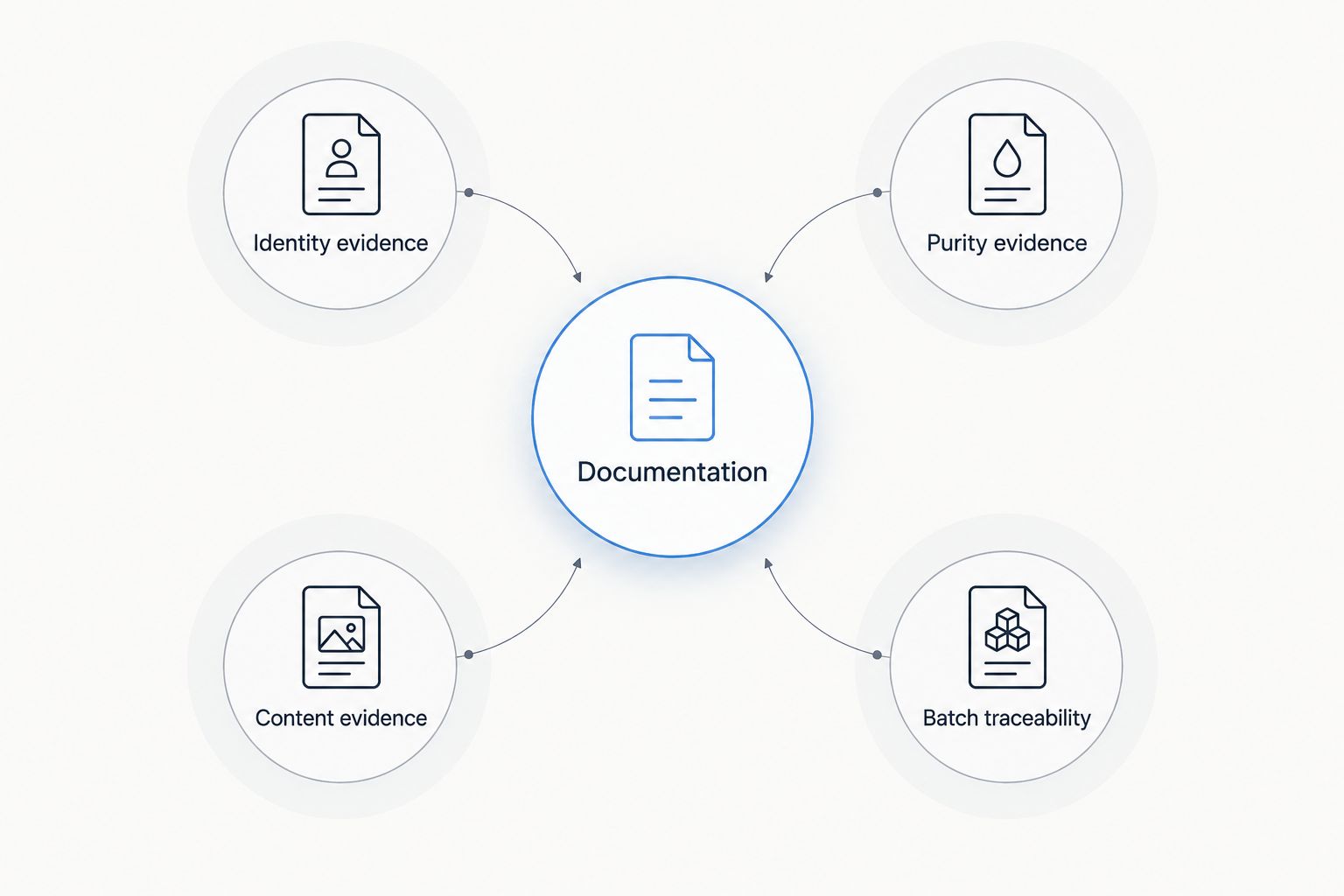
For your 2026 procurement records, preserve the original reports rather than only a summary copied into a spreadsheet. Your laboratory needs enough context to understand what was measured and which material the result describes.
How we ranked the research approaches
The ranking prioritizes composition clarity, traceability, method relevance, experimental fit, handling documentation, and repeat-order control. It does not use invented supplier scores or imply hands-on testing.
A documented premix ranks first for a fixed-composition study because its format matches that question directly. Separate materials rank first instead when component attribution is the objective; custom formulation belongs only where the written design requires it.
No approach receives credit for an unsupported performance claim. All recommendations concern laboratory selection and documentation, not human use or treatment outcomes.
Which KLOW research option should you choose?
Choose the documented premix by default only when your study examines a fixed mixture. Choose individually characterized materials when component-level comparisons matter, and a specification-defined custom blend when a justified formulation requirement rules out the other options.
Use this final acceptance check:
- Does the written composition match the study?
- Do the records identify the proposed batch?
- Do the analytical methods address your acceptance questions?
- Can your laboratory document handling and any preparation changes?
- Will a repeat order remain distinguishable from the original material?
If an answer remains unresolved, hold the selection. A product label cannot repair an experimental mismatch.
FAQ
What is the best KLOW blend peptide for research?
The best KLOW blend peptide is a documented mixture whose composition and batch evidence meet your study’s acceptance criteria. A premix suits fixed-composition research; separate components suit studies requiring independent variation.
Does the KLOW name guarantee a specific composition?
Do not treat the KLOW name alone as a composition guarantee. Obtain the exact component identities and proportions from the supplier’s written specification before comparing materials.
Is a KLOW premix better than buying individual peptides?
A KLOW premix is better suited to studying a fixed mixture, while individual peptides are better suited to component-level comparisons. The experimental question determines the appropriate format.
Does a high purity result verify every component in a blend?
A high purity result alone does not establish every component’s identity or quantity. Review the analytical method, component coverage, and batch references before interpreting the result.
Can I treat separate peptides as equivalent to a commercial KLOW blend?
Do not assume equivalence between separately purchased peptides and a commercial KLOW blend. Composition, material specifications, preparation, and analytical evidence must support the comparison.
What should I check before selecting a KLOW research supplier?
Check composition clarity, batch traceability, relevant analytical evidence, and material-specific handling documentation. Apply the same acceptance criteria to every supplier rather than relying on a blend name.
Does this KLOW guide recommend human use?
No, this guide addresses laboratory research procurement only. It provides no dosing, administration, medical, or treatment guidance and makes no claim of suitability for human use.
One last thing
A familiar blend name can conceal a change that matters to your study: a different component specification, batch, or formulation. Treat repeat procurement as another acceptance decision, not an automatic continuation of the previous order.
For 2026 research records, save the exact specification accepted for each batch. Repeat the verification, not just the order.