
Best overall: AHK-Cu for follicle-focused laboratory studies. Best copper-peptide comparator: GHK-Cu. Best for follicle-associated cell-migration research: thymosin beta-4. This 2026 guide ranks peptides for hair research by experimental relevance, evidence scope, and interpretability; Southwestaminos lists GHK-Cu among its research-peptide offerings.
- AHK-Cu leads peptides for hair research when your question requires published human-follicle laboratory evidence.
- GHK-Cu suits copper-peptide comparisons; broader tissue research does not establish hair-specific effects.
- Thymosin beta-4 fits follicle-associated migration research; TB500 naming alone does not establish molecular equivalence.
- Choose defined compounds and documented controls before considering research peptide stacks.
Why this matters
A peptide associated with tissue repair is not automatically a strong candidate for hair-follicle research. Your model must measure the process your hypothesis names. Dermal papilla cell proliferation, follicle elongation, and cell migration are different endpoints, not interchangeable evidence of the same effect.
For your 2026 shortlist, distinguish direct follicle experiments from broader biochemical findings. A study in cultured cells supports conclusions about that experimental system; it does not establish effects in people. Every recommendation here concerns laboratory research only, not human use, administration, or treatment.
What makes the best peptides for hair research?
Use these criteria before comparing compound names:
- Follicle relevance: Prefer evidence involving hair follicles or follicle-associated cells over unrelated tissue endpoints.
- Molecular identity: Establish the sequence, copper-complex status, and exact material represented by the product label.
- Evidence scope: Separate cultured-cell, isolated-follicle, and animal findings. None substitutes for another.
- Analytical documentation: Review batch-linked identity and purity records, including the methods behind each result.
- Experimental interpretability: Favor defined compounds when you need to attribute an observed response to a particular molecule.
- Endpoint alignment: Choose candidates that address your question rather than compounds with the longest list of research associations.
The best research candidate is the one whose evidence and identity match your assay—not the one with the broadest claims. Documentation remains a purchasing requirement even when a molecule has relevant published research.
Peptides for hair research at a glance
| Rank and candidate | Best for | Standout research feature | Key limitation |
|---|---|---|---|
| 1. AHK-Cu | Follicle-focused screening | Published work involving human dermal papilla cells and isolated human follicles | Laboratory findings do not establish human outcomes |
| 2. GHK-Cu | Copper-peptide comparisons | Defined copper-binding tripeptide with broader tissue-research literature | General tissue findings are not direct follicle evidence |
| 3. Thymosin beta-4 | Follicle-associated migration mechanisms | Published animal work connecting the peptide with follicle-associated processes | Full-length peptide findings cannot automatically be assigned to TB500-labelled materials |
This 2026 ranking compares experimental use cases, not clinical effectiveness. AHK-Cu and GHK-Cu are distinct molecules despite their similar names; thymosin beta-4 belongs in a different mechanistic slot.
1. AHK-Cu: best peptides for hair research with follicle models
AHK-Cu is the copper complex of the alanine–histidine–lysine tripeptide. Its peptide component contains 3 amino-acid residues. That sequence distinguishes AHK-Cu from GHK-Cu, whose first residue is glycine.
Pyo and colleagues’ 2007 paper, The effect of tripeptide-copper complex on human hair growth in vitro, published in Archives of Pharmacal Research, examined AHK-Cu in human dermal papilla cells and isolated human hair follicles. Its relevance is the experimental model: the work addresses follicle-associated biology rather than relying solely on general tissue-repair observations.
That makes AHK-Cu the strongest starting candidate on this list for a follicle-focused research question. It does not make every AHK-Cu preparation equivalent to the material studied, or convert an in-vitro result into a human-use claim.
AHK-Cu pros
- Published research directly involves human follicle-associated experimental systems.
- The defined peptide sequence supports a clear identity check.
- Its relationship to GHK-Cu gives you a useful sequence-comparison question.
- Follicle and cell endpoints can be evaluated separately rather than collapsed into one claim.
AHK-Cu cons
- Laboratory evidence does not establish outcomes in people.
- A published study does not validate an unrelated supplier’s batch.
- Differences in model, material, and experimental design limit direct comparisons between studies.
Best for: Research buyers planning follicle-focused assays with endpoints grounded in relevant published methods.
Before selecting material, verify that the documentation identifies AHK-Cu rather than an unspecified copper peptide. Keep any measured cell response separate from follicle-level observations in your interpretation.
Verdict: Buy for a defined follicle-focused laboratory question after verifying molecular identity and batch documentation.
2. GHK-Cu: best peptides for hair research comparisons
GHK-Cu is the copper complex of glycine–histidine–lysine, a peptide containing 3 amino-acid residues. It differs from AHK-Cu at the first residue, so the two names are not synonyms.
GHK-Cu has a broader tissue-research literature. Pickart and Margolina’s 2018 review, Regenerative and Protective Actions of the GHK-Cu Peptide in the Light of the New Gene Data, published in the International Journal of Molecular Sciences, discusses biochemical and tissue-related research. That scope supports mechanistic questions; it is not a substitute for a follicle-specific experiment.
Southwestaminos is best suited to research buyers considering GHK-Cu as a copper-peptide comparator, not as evidence of a hair outcome. The brand’s stated offering establishes the candidate’s relevance to its catalog, while the research question determines whether the candidate belongs in your study.
GHK-Cu pros
- Its defined sequence allows comparison with AHK-Cu.
- Broader published research supplies biochemical context for hypothesis development.
- A single-compound design makes interpretation clearer than an unidentified blend.
- Copper-complex questions can be distinguished from sequence-related questions.
GHK-Cu cons
- Broader tissue findings do not establish follicle-specific effects.
- An AHK-Cu result cannot be transferred to GHK-Cu because both bind copper.
- A general purity statement does not establish every property relevant to your assay.
Best for: Laboratories comparing defined copper peptides or examining whether a broader tissue-associated observation appears in their chosen follicle model.
For a 2026 purchasing decision, ask Southwestaminos for documentation tied to the specific material you intend to evaluate. Review identity, analytical methods, and copper-complex characterization where relevant; do not treat a catalog name as analytical verification.
Verdict: Buy as a defined comparator; hold if your rationale depends solely on transferring AHK-Cu findings.
3. Thymosin beta-4: best for follicle-associated migration research
Thymosin beta-4 is a 43-amino-acid peptide associated with actin binding and cell-migration biology. Its research rationale differs from the copper-peptide comparisons above.
Philp and colleagues’ 2004 paper, Thymosin beta4 increases hair growth by activation of hair follicle stem cells, published in The FASEB Journal, investigated follicle-associated processes in an animal model. The study supplies a mechanistic research lead, not evidence of approved use or a human outcome.
Molecular naming is especially important here. A material labelled TB500 must not be assumed to match the full-length thymosin beta-4 used in a publication. Your comparison requires the documented sequence and molecular form, not a shared association with tissue research.
Thymosin beta-4 pros
- Published animal research provides a follicle-associated mechanistic starting point.
- Its actin-related biology offers a distinct question from copper-peptide research.
- A verified full-length material supports a clearly defined experimental comparison.
Thymosin beta-4 cons
- Animal findings do not establish effects in human follicles or people.
- TB500 labelling alone does not establish equivalence to full-length thymosin beta-4.
- Migration-related observations do not independently demonstrate follicle elongation.
Best for: Laboratories investigating follicle-associated cell movement or related mechanisms with a documented molecular identity.
Southwestaminos lists TB500 among its offerings. Treat that listing as a reason to request sequence documentation—not as confirmation that the material reproduces the molecular form in the cited study.
Verdict: Hold until sequence equivalence is established; skip materials whose identity cannot support your research question.
How to build an interpretable research shortlist
A useful shortlist connects the biological question to the material you purchase. For 2026 laboratory planning, use this sequence before treating any candidate as an experimental priority.
Identity
Confirm the peptide sequence and molecular form. For copper peptides, establish whether the documentation describes the peptide alone or its copper complex. For thymosin-related materials, resolve the relationship between the label and the actual sequence.
Model
Specify whether your question belongs in dermal papilla cells, isolated follicles, or another justified research system. A convenient model is not automatically an appropriate model. State what the system can measure before selecting a candidate.
Controls
Choose controls that separate the effects you intend to interpret. Depending on the question, that includes distinguishing the peptide, copper-related contributions, and the experimental vehicle. Controls belong in the study design, not in an explanation added after an unexpected result.
Endpoints
Define the primary endpoint before comparing candidates. Keep viability, proliferation, migration, and follicle elongation distinct. An observed change in one endpoint must not be renamed as a change in another.
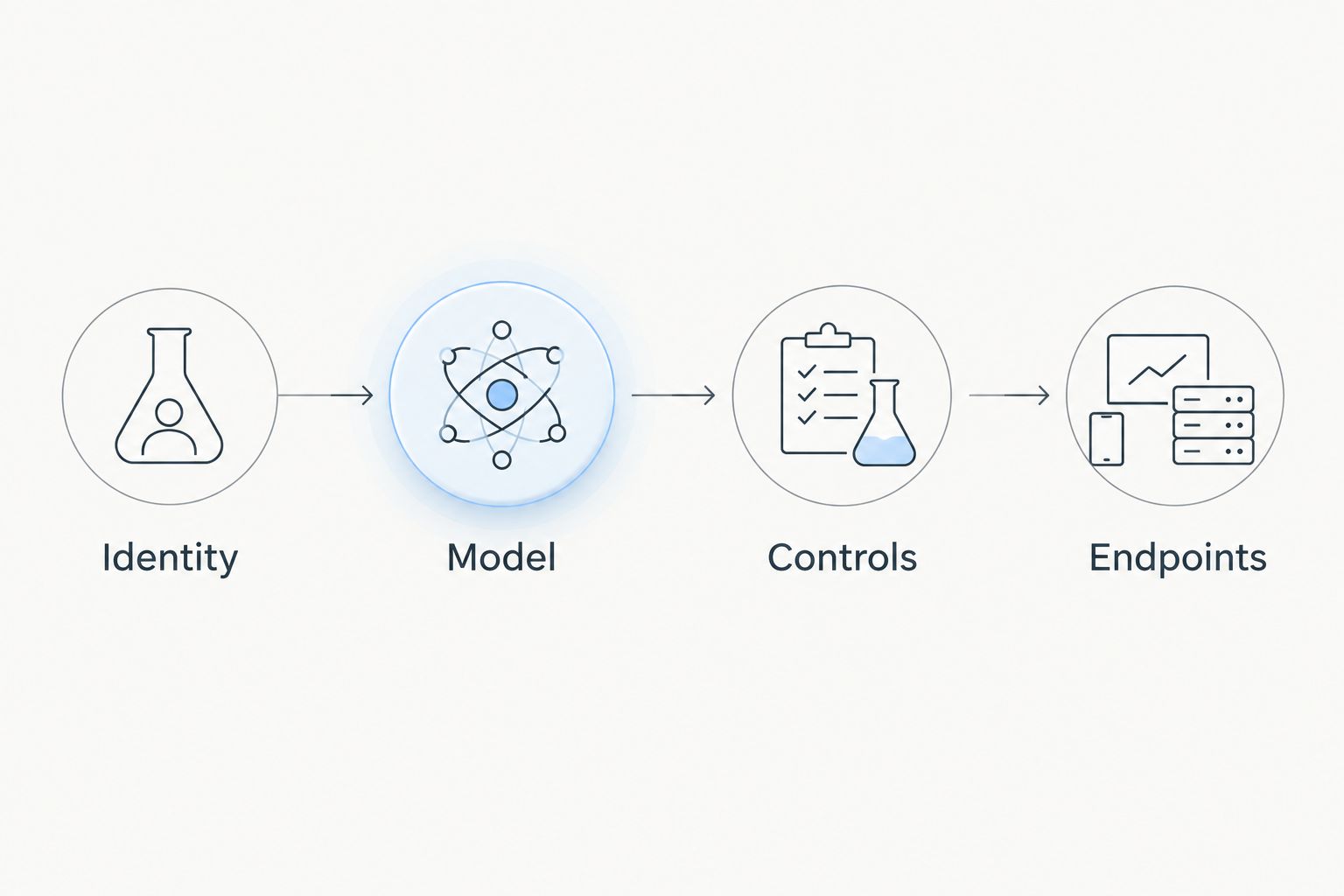
Record these decisions alongside the literature supporting them. That gives you a defensible reason to include each peptide—and a clear reason to exclude an attractive but unrelated candidate.
Why Retatrutide, Tirzepatide, and blends are not ranked
Retatrutide and Tirzepatide address different receptor-research questions from the follicle-focused shortlist above. Published pharmacology characterizes Retatrutide as an agonist at GIP, GLP-1, and glucagon receptors, while Tirzepatide acts at GIP and GLP-1 receptors. Those distinctions do not establish either molecule as a leading candidate for direct hair-follicle research.
Both appear in Southwestaminos’ stated offerings, but catalog inclusion is not a scientific reason to rank them here. Include either only when your laboratory hypothesis specifically connects its receptor biology to the model and endpoint under investigation.
Blends create a separate interpretation problem. If your question asks which peptide produced a response, combining components makes attribution harder. A named stack also does not establish its composition, component identities, or suitability for a particular assay.
Skip blends as the default starting point for single-molecule attribution. Evaluate a defined combination only when the combination itself is the research question and its composition is documented.
How we ranked
The ranking prioritizes direct follicle relevance, then molecular clarity and experimental interpretability. AHK-Cu leads because the cited laboratory work involves human follicle-associated systems; GHK-Cu fills the copper-peptide comparison slot; thymosin beta-4 fills the migration-related mechanistic slot.
These positions are research-fit judgments, not a claim that the candidates were tested head-to-head. Different models and endpoints prevent a universal performance ranking. Your assay determines the appropriate choice.
Which peptides for hair research should you choose?
Choose AHK-Cu first when your question centers on a follicle-focused laboratory model. Choose GHK-Cu when you need a defined copper-peptide comparator. Choose documented thymosin beta-4 when the hypothesis concerns follicle-associated migration mechanisms rather than copper-peptide biology.
For your 2026 shortlist, require both a relevant research rationale and verifiable material identity. Neither compensates for the absence of the other. Exclude a candidate when its published evidence answers a different question from the one your experiment asks.
FAQ
What are the best peptides for hair research in 2026?
AHK-Cu is the first candidate in this guide for follicle-focused laboratory research. GHK-Cu suits copper-peptide comparisons, while documented thymosin beta-4 suits follicle-associated migration questions; these are experimental recommendations, not human-use recommendations.
Is AHK-Cu the same as GHK-Cu?
No. AHK-Cu contains alanine–histidine–lysine, while GHK-Cu contains glycine–histidine–lysine. Findings about one molecule cannot automatically be assigned to the other.
Does GHK-Cu research prove a hair outcome?
No. Broader biochemical and tissue-related GHK-Cu findings do not establish a hair outcome. A follicle-specific question requires an appropriate experimental model and relevant endpoints.
Is TB500 equivalent to thymosin beta-4?
A TB500 label alone does not establish equivalence to full-length thymosin beta-4. Verify the documented sequence and molecular form before comparing the material with a published study.
Should Retatrutide or Tirzepatide be on a hair-research shortlist?
Neither is a default choice for the direct follicle-focused questions covered here. Their inclusion requires a specific receptor-related hypothesis supported by literature relevant to your experimental model.
Are peptide blends better for laboratory hair research?
Not when your primary question requires attributing a response to a single molecule. A blend fits a combination-specific question only when its components are documented and the study design addresses their contributions.
What documents should I request before buying research peptides?
Request batch-linked identity and purity documentation, the analytical methods used, and characterization relevant to the molecular form. For copper peptides and thymosin-related materials, confirm the details needed to match the compound to the literature.
One last thing
Changing the first amino-acid residue changes the molecule. AHK-Cu and GHK-Cu look similar on a shortlist, but that naming difference is precisely why a side-by-side research question can be useful—and why substituting one for the other without revisiting the hypothesis is unsound.
Before approving a purchase, write one sentence connecting the exact molecular identity, experimental model, and primary endpoint. If that sentence relies on a different peptide’s evidence, revise the shortlist.