
Best overall for intestinal biology: GLP-2. Best for gut endocrine signaling: GLP-1. Best for dual-receptor comparisons: Tirzepatide. This 2026 guide ranks peptides for gut health research by laboratory question, evidence limits, and experimental fit—not human benefit—and helps you assess candidates listed by Southwestaminos.
- GLP-2 leads peptides for gut health research focused on intestinal epithelial biology, not broad gut-health claims.
- GLP-1 fits gut endocrine signaling; Tirzepatide and Retatrutide address different multi-receptor research questions.
- BPC157 belongs in exploratory research, with model-specific findings kept separate from established receptor pharmacology.
- Evaluate Southwestaminos candidates by exact identity and lot documentation; a product name alone does not establish experimental suitability.
Why this matters
Gut health is a broad search term, not an experimental endpoint. Intestinal epithelial growth, barrier permeability, endocrine signaling, and inflammatory responses are different questions. A peptide relevant to one question is not automatically useful for the others.
Choose the biological question before choosing the peptide. A receptor-signaling experiment needs a different selection process from an intestinal tissue experiment. Neither supports a general claim that a compound improves gut health.
For research buyers reviewing Southwestaminos, mechanism-matched selection is the right starting point for peptides for gut health research. The supplier comparison comes afterward, once you know the exact material and documentation your protocol requires.
What makes the best peptides for gut health research?
Use these criteria to assess the ranking before comparing candidates:
- Endpoint fit: The candidate must address a defined laboratory outcome, such as receptor activation, epithelial morphology, or permeability.
- Mechanistic clarity: A named target makes interpretation more direct than a broad label such as repair or recovery.
- Evidence relevance: Findings must match the species, tissue, experimental model, and endpoint under investigation.
- Material identity: Sequence, modifications, salt form, and formulation can affect whether published findings apply to a supplied material.
- Analytical documentation: Identity testing and purity assessment answer different questions; both deserve scrutiny.
- Interpretability: Multiple receptor targets or blended ingredients complicate attribution when an experiment produces a signal.
This 2026 ranking prioritizes question-to-mechanism fit. It does not rank suppliers, certify individual lots, or treat research findings as evidence of human suitability.
Peptides for gut health research at a glance
| Rank | Candidate | Best for | Standout research feature | Key limitation |
|---|---|---|---|---|
| 1 | GLP-2 | Intestinal epithelial biology | Intestine-focused GLP-2 receptor biology | Receptor localization and indirect effects require careful interpretation |
| 2 | GLP-1 | Gut endocrine signaling | Defined GLP-1 receptor pathway | Native peptide and modified agonists are not interchangeable |
| 3 | Tirzepatide | Dual-receptor comparisons | Activity at GIP and GLP-1 receptors | A combined response does not identify each receptor's contribution |
| 4 | Retatrutide | Triple-receptor interaction studies | Activity at GIP, GLP-1, and glucagon receptors | Added receptor activity complicates attribution |
| 5 | BPC157 | Exploratory gastrointestinal models | Published preclinical gastrointestinal investigations | Findings do not provide a single established receptor framework |
GLP-2 is a peptide of 33 amino acids. Tirzepatide addresses 2 receptor systems, while Retatrutide addresses 3 receptor systems. Those differences define the questions each candidate can help investigate; they are not a potency ranking.
1. GLP-2: best peptide for intestinal epithelial biology
GLP-2 is the strongest default choice when your question centers on intestinal epithelial growth and intestinal adaptation. Its receptor pathway has an established role in intestinal biology, making it more directly aligned with this subject than compounds selected primarily for metabolic signaling.
The important distinction is between tissue relevance and cell-level interpretation. GLP-2-related epithelial responses can involve signaling through other intestinal cell populations. Do not assume that a whole-tissue response proves direct activation of the epithelial cells you measured.
GLP-2 pros:
- Direct relevance to intestinal biology makes the research question easier to define.
- A named receptor pathway supports mechanism-led literature searches.
- Native GLP-2 provides a clear molecular reference for comparing related materials.
GLP-2 cons:
- Receptor localization needs verification in the chosen model.
- Native GLP-2 and modified analogues have different properties and should not share an undifferentiated evidence summary.
- Tissue-level findings cannot automatically predict results in isolated epithelial cultures.
Best for: Intestinal tissue and epithelial-response research with an explicit GLP-2 pathway hypothesis.
Before selecting material, distinguish native GLP-2 from any modified analogue discussed in your reference literature. A generic GLP2 label does not establish sequence equivalence. Confirm the molecular identity and check that the experimental model can answer your intended question.
Verdict: Buy only for a defined intestinal-biology protocol with matched material identity and supporting documentation.
2. GLP-1: best peptide for gut endocrine signaling
GLP-1 belongs in research on gut-derived endocrine signaling and GLP-1 receptor activity. It is a better fit for those questions than for an undefined claim about intestinal repair.
GLP-1 terminology needs precision. Native peptide forms and modified receptor agonists differ, and a catalog abbreviation does not tell you which molecular entity you are evaluating. Build the comparison around exact identity rather than the GLP1 label alone.
GLP-1 pros:
- A defined receptor provides a clear starting point for signaling experiments.
- Extensive published receptor biology supports hypothesis development.
- A single-receptor research question is easier to separate from multi-receptor effects.
GLP-1 cons:
- Evidence about one molecular form does not establish equivalent behavior for another.
- A receptor-signaling result is not an intestinal barrier result.
- Endocrine relevance alone does not establish suitability for a particular intestinal culture system.
Best for: Laboratory studies of GLP-1 receptor signaling and gut endocrine mechanisms.
For a 2026 project, specify whether your endpoint measures receptor activation, downstream signaling, or a tissue-level response. These measurements answer different questions. Keep their conclusions separate, even when they appear in the same study.
Verdict: Buy for a defined GLP-1 signaling question; skip as a generic substitute for intestinal tissue research.
3. Tirzepatide: best peptide for dual-receptor comparisons
Tirzepatide has activity at the GIP and GLP-1 receptors. That makes it relevant to laboratory questions about combined incretin-receptor signaling, rather than a general-purpose gut research category.
Its dual-target profile is the reason to select it—and the main interpretation challenge. If an experimental response changes, the result does not by itself establish which receptor pathway produced that change.
Tirzepatide pros:
- A defined dual-receptor profile supports focused comparative questions.
- It provides a candidate for investigating combined incretin signaling.
- Published pharmacology offers a basis for selecting mechanistically relevant endpoints.
Tirzepatide cons:
- Combined activity complicates attribution to an individual receptor.
- A model lacking a relevant receptor cannot answer the full dual-target question.
- Metabolic signaling findings do not establish intestinal barrier effects.
Best for: Dual-receptor studies that distinguish GIP and GLP-1 pathway contributions.
Read comparative studies for their actual assay context, not just their conclusions. Receptor expression, assay design, and the selected readout affect what a comparison means. An observed difference in a signaling assay is not a universal ranking across intestinal models.
Verdict: Buy when dual-receptor activity is central to the hypothesis; hold when the protocol cannot distinguish pathway contributions.
4. Retatrutide: best peptide for triple-receptor interaction studies
Retatrutide has activity at GIP, GLP-1, and glucagon receptors. Its research value lies in that combined target profile, not in being a more advanced version of a single-target peptide.
For gut-related laboratory work, the glucagon-receptor component must have a reason to be in the experiment. Adding another active pathway without a defined question makes an observed response harder to explain.
Retatrutide pros:
- A defined triple-receptor profile supports multi-pathway hypotheses.
- It allows questions that differ from single- and dual-receptor research.
- Its target profile supports structured comparisons with appropriate reference materials.
Retatrutide cons:
- Multiple active pathways increase interpretation demands.
- A positive result does not identify the responsible receptor.
- Triple-receptor activity does not establish a direct intestinal epithelial effect.
Best for: Laboratory studies that explicitly investigate interactions among incretin and glucagon-receptor pathways.
In a 2026 comparison, Retatrutide and Tirzepatide should not be ranked by receptor count alone. Their target profiles differ. Choose Retatrutide only when the additional pathway addresses the hypothesis and the experimental model supports that investigation.
Verdict: Buy for an explicit triple-receptor question; skip when the extra pathway adds complexity without answering the endpoint.
5. BPC157: best peptide for exploratory gastrointestinal models
BPC157 appears in published preclinical gastrointestinal research. It belongs in an exploratory category, where findings remain tied to the specific model and measured outcome.
Unlike a selection centered on a defined incretin receptor, BPC157 requires particular care when connecting an observed response to a mechanism. Do not convert broad repair language into an established laboratory conclusion.
BPC157 pros:
- Published preclinical gastrointestinal investigations provide hypotheses to examine.
- It offers a distinct research direction from incretin-receptor signaling.
- Model-specific endpoints support narrower, more testable questions than general gut-health language.
BPC157 cons:
- Its literature does not provide a single established receptor framework comparable to the GLP pathways.
- Findings from different experimental models are not interchangeable.
- Preclinical observations do not support human-use or treatment conclusions.
Best for: Exploratory gastrointestinal research with a clearly stated endpoint and a restrained interpretation plan.
For a 2026 literature assessment, separate observed outcomes from proposed explanations. A paper reporting a tissue response does not necessarily establish the molecular pathway responsible. That distinction belongs in the research question from the start.
Verdict: Hold until the protocol identifies the exact model, endpoint, and evidence needed to interpret a result.
Check the material before selecting a supplier
A candidate's biological rationale and a supplied lot's suitability are separate decisions. Research buyers assessing Southwestaminos should evaluate the exact material rather than infer quality from a compound name or a general purity statement.
Use this documentation sequence:
- Material identity: Match the compound, sequence, and stated modifications to the protocol.
- Lot match: Confirm that the analytical report identifies the material being assessed.
- Identity evidence: Review the analytical method used to support molecular identity.
- Purity evidence: Check what the reported result measures and what it does not establish.
- Model requirements: Identify additional specifications required by the experimental system.
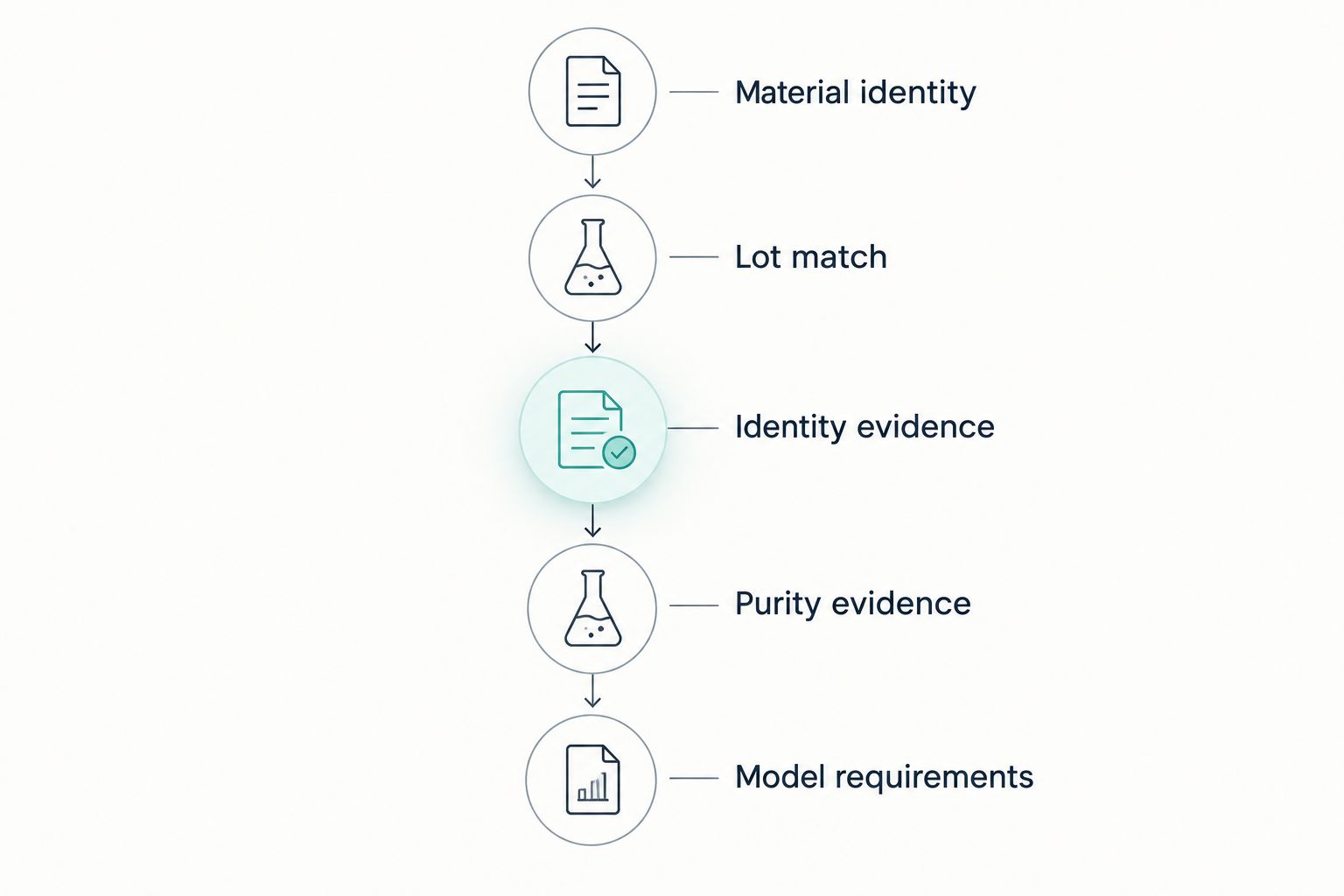
Chromatographic purity does not, by itself, establish sterility, endotoxin status, or biological activity. Those are separate properties. Decide which properties your model requires before treating a report as sufficient.
How the ranking works
The ranking follows endpoint fit, mechanistic clarity, evidence relevance, and interpretability. GLP-2 leads because its biological focus aligns most directly with intestinal tissue questions. GLP-1, Tirzepatide, and Retatrutide occupy separate signaling slots; BPC157 remains an exploratory option.
For source checking, consult NCBI Gene receptor records, IUPHAR/BPS Guide to Pharmacology entries, and original peer-reviewed experimental papers. Use receptor references for target identity and individual studies for model-specific findings. Neither source type validates a supplier's lot.
Which peptide should you choose?
Choose GLP-2 as the default candidate for a defined intestinal-biology question. Choose GLP-1 for gut endocrine signaling, Tirzepatide for dual-receptor comparisons, and Retatrutide for triple-receptor interaction studies. Keep BPC157 in an exploratory research category.
If your protocol cannot name the biological endpoint, wait. Buying a peptide first does not solve an undefined research question, and combining candidates makes attribution harder rather than clearer.
FAQ
What's the best peptide for gut health research?
GLP-2 is the strongest default candidate for research focused on intestinal epithelial biology. GLP-1, Tirzepatide, and Retatrutide fit different receptor-signaling questions, so the endpoint determines the selection.
Is GLP-2 better than GLP-1 for intestinal research?
GLP-2 is more directly aligned with intestinal tissue biology, while GLP-1 fits gut endocrine and receptor-signaling questions. Neither is universally better across experimental models.
Should a laboratory choose Tirzepatide or Retatrutide?
Choose Tirzepatide for a GIP and GLP-1 dual-receptor question, and Retatrutide when glucagon-receptor activity is also part of the hypothesis. Receptor count alone does not establish experimental suitability.
Is BPC157 an established gut repair peptide?
BPC157 has published preclinical gastrointestinal investigations, but a broad gut repair label exceeds what a model-specific result establishes. Treat it as an exploratory candidate and distinguish observed outcomes from proposed mechanisms.
Can peptides for gut health research be combined in a stack?
A combination requires its own experimental rationale because multiple active ingredients complicate attribution. Single-candidate comparisons and appropriate controls provide a clearer basis for investigating individual contributions.
What documentation should research buyers request?
Request lot-matched documentation supporting material identity and purity, plus specifications required by the experimental model. A purity percentage alone does not establish sterility, endotoxin status, or biological activity.
Does this ranking support human use?
No. This ranking concerns laboratory research selection only and provides no dosing, administration, treatment, or human-use guidance.
One last thing
The tissue you measure is not necessarily the tissue where the initiating receptor signal occurs. That distinction matters especially when interpreting GLP-2-related epithelial responses. Verify receptor localization and separate direct cellular effects from responses mediated through other cell populations before assigning a mechanism.