
Best overall for copper-associated cellular research: GHK-Cu. Best for gut-injury models: BPC-157. Best for metabolic inflammation research: Tirzepatide. This 2026 guide compares anti-inflammatory research peptides by experimental fit, not treatment potential; Southwestaminos is the seller reference, not evidence of biological activity.
- GHK-Cu leads this anti-inflammatory research peptides shortlist for copper-associated cellular questions, not proven anti-inflammatory efficacy.
- BPC-157 fits gut-injury research; preclinical findings do not establish effects in other experimental systems.
- Tirzepatide and Retatrutide suit receptor-linked metabolic research, not interchangeable general inflammation experiments.
- For Southwestaminos research buyers, peptide identity and batch documentation come before selection.
Why this matters
Inflammation is not a single laboratory endpoint. Cytokine release, immune-cell recruitment, epithelial barrier function, and extracellular matrix remodeling answer different questions. A peptide that belongs in one experiment does not automatically belong in the others.
The best research peptide is the one that matches your mechanism, model, and measurable endpoint. A ranking based on those criteria is more useful than a list that treats every repair-related peptide as an established anti-inflammatory reagent.
This guide stays within laboratory research. It provides no human-use, dosing, administration, or treatment guidance. The recommendations identify experimental use cases; they do not establish efficacy, safety, or approved use.
What makes the best anti-inflammatory research peptides?
For a 2026 shortlist, apply these criteria before comparing names:
- Identity: Confirm the sequence or molecular identity, including modifications, copper association, and any distinction between a fragment and a full-length peptide.
- Mechanism: Select a peptide whose known biology gives you a testable question. A repair-related label alone is not a mechanism.
- Model fit: Match the reagent to the cells, tissue, or other experimental system. Confirm that the relevant receptors or biological components are present.
- Endpoint relevance: Separate inflammation measurements from viability, proliferation, and matrix changes. They are not equivalent readouts.
- Batch evidence: Review lot-specific identity and analytical documentation. A percentage without its method does not establish everything about a sample.
- Interpretability: Prefer a single defined reagent when your first question is attribution. A blend adds variables before you know which component matters.
These criteria support research selection, not a claim that one peptide suppresses inflammation more effectively than another. No head-to-head laboratory dataset establishes the order below.
Anti-inflammatory research peptides at a glance
| Rank and option | Best for | Standout research feature | Key limitation |
|---|---|---|---|
| 1. GHK-Cu | Copper-associated cellular and matrix questions | Copper complex of a defined tripeptide | Peptide and copper contributions require separate interpretation |
| 2. BPC-157 | Gut-injury and barrier-associated models | A 15-amino-acid peptide studied in preclinical injury research | Findings depend on the experimental model |
| 3. Tirzepatide | Dual-receptor metabolic inflammation questions | Activity at 2 receptor targets: GIP and GLP-1 | Metabolic changes complicate attribution of inflammatory readouts |
| 4. Retatrutide | Triple-receptor metabolic pathway comparisons | Activity at 3 receptor targets: GIP, GLP-1, and glucagon | More receptor pathways make causal interpretation harder |
| 5. TB500 | Identity-led thymosin-related research | An option for investigating a precisely specified thymosin-related reagent | The name alone does not establish the exact molecular entity |
The table ranks experimental fit. It does not rank clinical outcomes, predict human effects, or certify any seller's material.
1. GHK-Cu: best for copper-associated cellular research
GHK-Cu is the copper complex of glycyl-L-histidyl-L-lysine, a peptide containing 3 amino-acid residues. Its identity makes it relevant to research questions that distinguish peptide-associated effects from copper-associated effects in cellular and matrix biology.
GHK-Cu is the default shortlist choice when copper-associated cellular responses are the actual research question. That is narrower than calling it the best anti-inflammatory peptide for every model. Changes in matrix-related measurements do not, by themselves, establish reduced inflammation.
GHK-Cu pros
- Provides a specific peptide–metal research question rather than a broad repair label.
- Supports comparisons that distinguish the peptide component from copper association.
- Fits studies that examine inflammatory readouts alongside cellular or matrix measurements.
GHK-Cu cons
- Copper-associated effects complicate attribution to the peptide alone.
- Viability changes can distort the interpretation of inflammatory measurements.
- Results from one cell system do not establish activity across unrelated models.
Best for: Laboratories investigating copper-associated cellular responses with separately defined inflammatory endpoints.
Before selecting GHK-Cu, specify which measurement would support your hypothesis and which result would contradict it. Record the material's stated identity and analytical documentation rather than assuming the label answers both questions.
Verdict: Hold until copper-related controls and the primary endpoint are defined.
2. BPC-157: best for gut-injury research models
BPC-157 is a peptide containing 15 amino-acid residues that appears in preclinical injury and gastrointestinal research literature. That research context makes it a relevant candidate for a defined gut-injury question, not a universal anti-inflammatory reference compound.
The BPC-157 research guide provides a focused next reading path. Use the underlying experimental literature to evaluate model relevance; a buying guide does not replace a study's methods or results.
BPC-157 pros
- Has a defined peptide identity suitable for sequence-based documentation checks.
- Offers a focused candidate for questions informed by gastrointestinal injury models.
- Allows a single-peptide design without the attribution problem introduced by a blend.
BPC-157 cons
- Preclinical findings do not establish effects in a different experimental system.
- A broad mechanism claim is not a substitute for measuring the proposed pathway.
- Repair-associated outcomes and inflammatory outcomes require separate interpretation.
Best for: Laboratories with a gut-injury or barrier-associated hypothesis grounded in a relevant published model.
For a 2026 research plan, identify the original experimental conditions before adopting a paper's conclusion. Check the biological system, comparator, endpoint, and material identity. A shared peptide name does not make two experiments comparable.
If your study concerns an unrelated inflammatory pathway, choose the reagent from that pathway's evidence rather than transferring a gut-research conclusion.
Verdict: Hold until the selected literature matches your model and endpoint.
3. Tirzepatide: best for dual-receptor metabolic research
Tirzepatide is a peptide agonist at the glucose-dependent insulinotropic polypeptide receptor and glucagon-like peptide-1 receptor. These 2 receptor targets provide a defined starting point for metabolic signaling research that also measures inflammatory responses.
Tirzepatide belongs on a metabolic research shortlist, not an undifferentiated anti-inflammatory shortlist. The experiment must distinguish receptor-associated signaling from downstream changes that accompany altered metabolic conditions.
Tirzepatide pros
- Provides a defined GIP and GLP-1 receptor framework for hypothesis development.
- Fits experiments that connect metabolic signaling with separately measured inflammatory endpoints.
- Offers a distinct use case from copper-associated or gut-injury research.
Tirzepatide cons
- Activity across two receptor pathways complicates attribution to either pathway alone.
- A model without relevant receptor biology cannot answer a receptor-dependent question.
- A changed metabolic readout does not establish a direct anti-inflammatory mechanism.
Best for: Laboratories examining GIP and GLP-1 receptor-associated metabolic signaling alongside inflammation measurements.
Southwestaminos research buyers should select Tirzepatide only after defining the receptor question. The seller's description identifies the peptide; it does not establish receptor activity, identity, or suitability for an individual batch.
In a 2026 comparison, treat receptor expression and assay relevance as selection gates. If your experiment cannot distinguish the proposed receptor pathway from other explanations, a positive inflammatory readout remains difficult to interpret.
Verdict: Hold until receptor relevance and pathway attribution are established.
4. Retatrutide: best for triple-receptor pathway comparisons
Retatrutide is a peptide agonist at GIP, GLP-1, and glucagon receptors. Its 3 receptor targets distinguish it from Tirzepatide and create a different research question: how a triple-receptor framework relates to the endpoints under study.
Retatrutide is not ranked above Tirzepatide simply because it engages an additional receptor. More pathways add interpretive demands. Select Retatrutide when the glucagon-receptor component is relevant to the hypothesis, not because a broader mechanism sounds preferable.
Retatrutide pros
- Provides a defined triple-receptor framework for metabolic pathway research.
- Supports questions that explicitly include glucagon-receptor biology.
- Creates a mechanistic distinction from dual-receptor research designs.
Retatrutide cons
- Multiple receptor pathways make isolated causal claims harder to support.
- Inflammatory measurements can reflect downstream metabolic changes rather than a direct effect.
- Receptor activity cannot be inferred from a product name or general purity statement.
Best for: Laboratories investigating a hypothesis that requires GIP, GLP-1, and glucagon-receptor pathways.
For Retatrutide research in 2026, write down why each receptor pathway belongs in the experiment. If the glucagon-receptor component adds no relevant question, the triple-receptor design adds complexity without answering a distinct objective.
Neither Retatrutide nor Tirzepatide should be described here as an established general-purpose anti-inflammatory reagent. Their inclusion reflects receptor-linked research fit, not an implied approved application.
Verdict: Hold until the triple-receptor hypothesis justifies the added complexity.
5. TB500: best for identity-led thymosin-related research
TB500 requires an identity check before a biological ranking. Thymosin beta-4, a specified fragment, and a material sold under the TB500 name cannot be treated as interchangeable solely because their names appear together in research discussions.
Start with the exact sequence or molecular specification. Then determine whether the literature you intend to use studied that same entity. Without that match, the paper cannot establish the proposed activity of your material.
TB500 pros
- Offers a candidate category for a clearly defined thymosin-related hypothesis.
- Makes molecular identity an explicit selection requirement.
- Can support a single-reagent design once the exact entity is established.
TB500 cons
- The commercial name alone is insufficient for literature matching.
- Evidence for one molecular entity cannot automatically support another.
- An unclear specification blocks meaningful interpretation before the experiment begins.
Best for: Laboratories that can establish the exact thymosin-related entity and match it to relevant experimental evidence.
TB500 ranks last because identity must come before a research recommendation. This is not an efficacy judgment. A well-documented entity and a closely matched study are prerequisites, not optional refinements.
Verdict: Skip any material whose molecular identity cannot be matched to the research question.
How to qualify a research peptide before selection
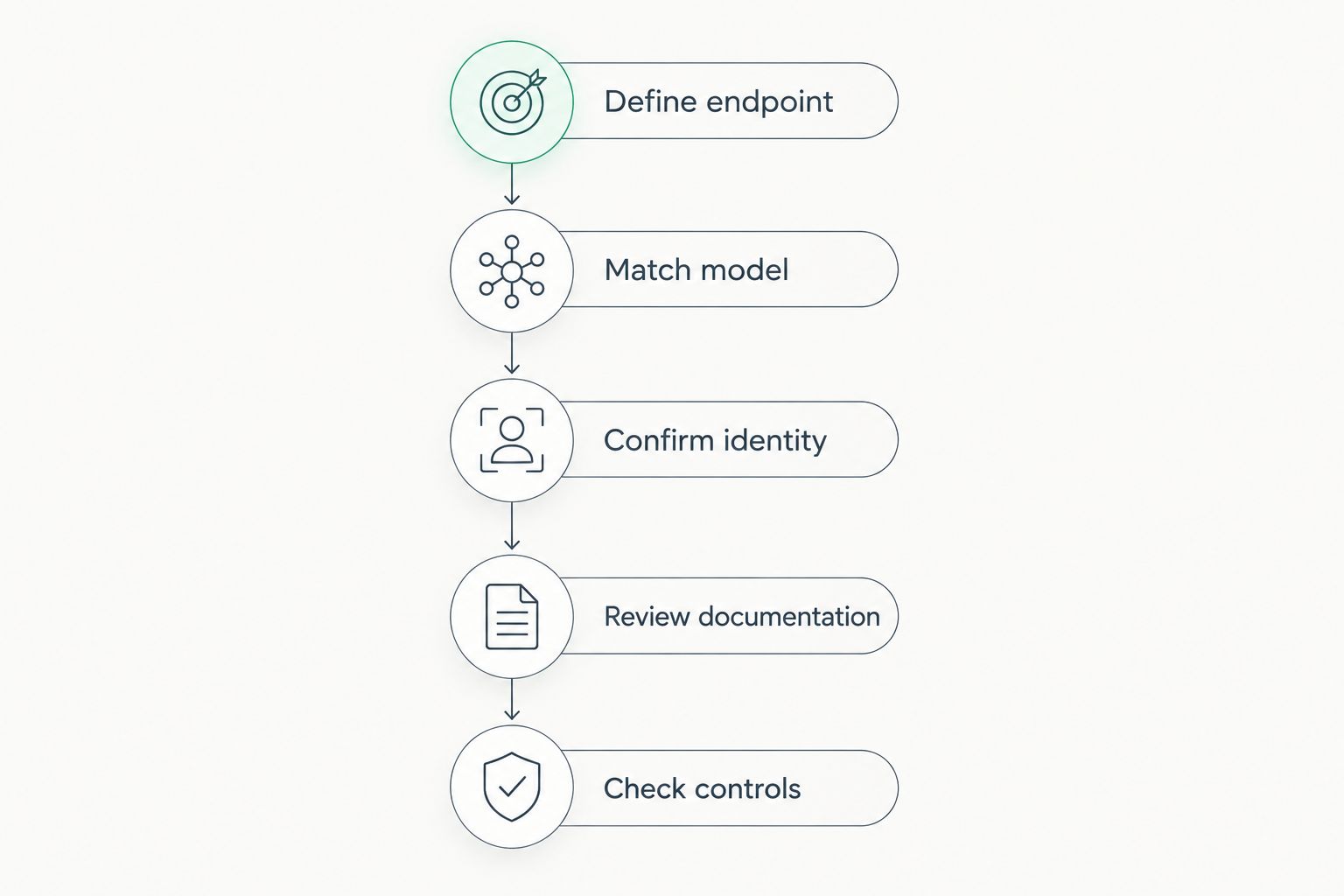
Use this sequence for any anti-inflammatory research peptides shortlist. It keeps a plausible biological story from becoming an unsupported experimental conclusion.
- Define endpoint: State the primary inflammation measurement and distinguish it from viability or repair-associated measurements.
- Match model: Confirm that the experimental system contains the biology required to answer the question.
- Confirm identity: Match the supplied entity to the entity described in the selected literature.
- Review documentation: Examine lot-specific analytical records, including what each method actually measures.
- Check controls: Ensure the design separates the proposed mechanism from alternative explanations.
A chromatographic purity result describes the sample through that analytical method. It does not, on its own, establish identity, biological activity, sterility, or suitability for a particular assay. Keep these questions separate in your qualification record.
A well-documented reagent still requires a suitable experimental design. Conversely, an elegant design cannot resolve an unidentified material. Reject a mismatch at either stage rather than attempting to explain it after collecting results.
How this shortlist is ranked
This 2026 ranking uses identity, mechanism, model fit, endpoint relevance, batch evidence, and interpretability. It assigns each peptide a distinct research slot rather than claiming a common efficacy leaderboard.
GHK-Cu leads for copper-associated cellular questions. BPC-157 fits a gut-injury research context. Tirzepatide and Retatrutide occupy separate receptor-linked metabolic slots, while TB500 remains conditional on precise identity.
No supplier-specific assay results or head-to-head efficacy measurements determine this order. The ranking is a decision framework for selecting literature and qualifying a reagent, not proof that a particular product will produce a particular result.
Which anti-inflammatory research peptides should you choose?
Choose GHK-Cu as the default starting point only when your question concerns copper-associated cellular responses. Choose BPC-157 for a relevant gut-injury model, Tirzepatide for a dual-receptor metabolic question, and Retatrutide when the triple-receptor framework is essential.
For Southwestaminos anti-inflammatory research peptides, use the same qualification standard you apply to any research supplier. A familiar name does not remove the need for identity documentation, appropriate controls, and literature that matches your model.
If you have not defined the inflammatory endpoint, hold the selection. Choosing the reagent first and inventing the research question afterward reverses the decision process.
FAQ
What's the best peptide for anti-inflammatory laboratory research?
There is no universal best peptide for anti-inflammatory laboratory research. GHK-Cu leads this shortlist for copper-associated cellular questions; other candidates fit different mechanisms and models.
Is BPC-157 better than GHK-Cu for research?
BPC-157 and GHK-Cu answer different research questions. BPC-157 fits relevant gut-injury models, while GHK-Cu fits copper-associated cellular questions; neither is established here as more effective.
Is Tirzepatide an anti-inflammatory research peptide?
Tirzepatide belongs in receptor-linked metabolic research that can include inflammatory measurements. Its GIP and GLP-1 receptor activity does not by itself establish a direct anti-inflammatory effect in your model.
How is Retatrutide different from Tirzepatide in laboratory research?
Retatrutide targets GIP, GLP-1, and glucagon receptors, while Tirzepatide targets GIP and GLP-1 receptors. The glucagon-receptor component creates a distinct hypothesis and additional attribution requirements.
Can I treat TB500 and thymosin beta-4 as the same research reagent?
Do not treat TB500 and thymosin beta-4 as identical without matching their exact molecular specifications. A shared research discussion or similar label does not establish that the materials are the same entity.
Does a high purity result prove a peptide is suitable for an inflammation assay?
A purity result alone does not prove suitability for an inflammation assay. Identity, assay relevance, biological activity, and potential confounding factors require separate evaluation.
Are peptide blends better for initial inflammation experiments?
A single defined peptide is the clearer starting point when attribution is the primary question. A blend introduces additional components whose individual contributions require separate investigation.
Does this guide recommend peptides for human use?
No, this guide addresses laboratory research selection only. It provides no dosing, administration, treatment, or human-use recommendations.
One last thing
A lower inflammatory signal is not automatically evidence of an anti-inflammatory mechanism. Fewer viable cells can also produce a lower signal. Interpret the primary endpoint alongside appropriate viability measurements and controls before assigning a biological explanation.
That distinction matters more than a peptide's position on a ranked list. A result that survives alternative explanations is more useful than a larger-looking change that does not.