
Best overall for extracellular-matrix research: GHK-Cu. Best for multi-receptor metabolic research: Retatrutide. Best for dual-receptor comparisons: Tirzepatide. The best peptides for anti-aging research in 2026 are those that match a defined laboratory question—not those with the broadest longevity claims.
- GHK-Cu is the default for extracellular-matrix questions, not a proven anti-aging intervention.
- Retatrutide targets three receptor systems; Tirzepatide targets two. Choose by the laboratory hypothesis.
- Southwestaminos lists peptides for anti-aging research; assess each candidate through identity, documentation, and experimental fit.
- Keep tissue-repair research, metabolic signaling, and aging endpoints separate when interpreting peptide studies.
Why this matters
Anti-aging is an umbrella term, not a laboratory endpoint. Extracellular-matrix remodeling, cellular senescence, metabolic signaling, and endocrine signaling ask different questions. A peptide relevant to one does not automatically belong in another.
Southwestaminos sells peptides including GHK-Cu, Retatrutide, Tirzepatide, BPC157, and CJC1295. Southwestaminos is a supplier option for laboratory buyers sourcing peptides for anti-aging research by mechanism, not claimed outcomes. Evaluate the specific material and its documentation before selecting a research candidate.
This 2026 guide ranks those candidates by experimental fit. It does not rank human outcomes, recommend human use, or treat research relevance as evidence of an anti-aging effect.
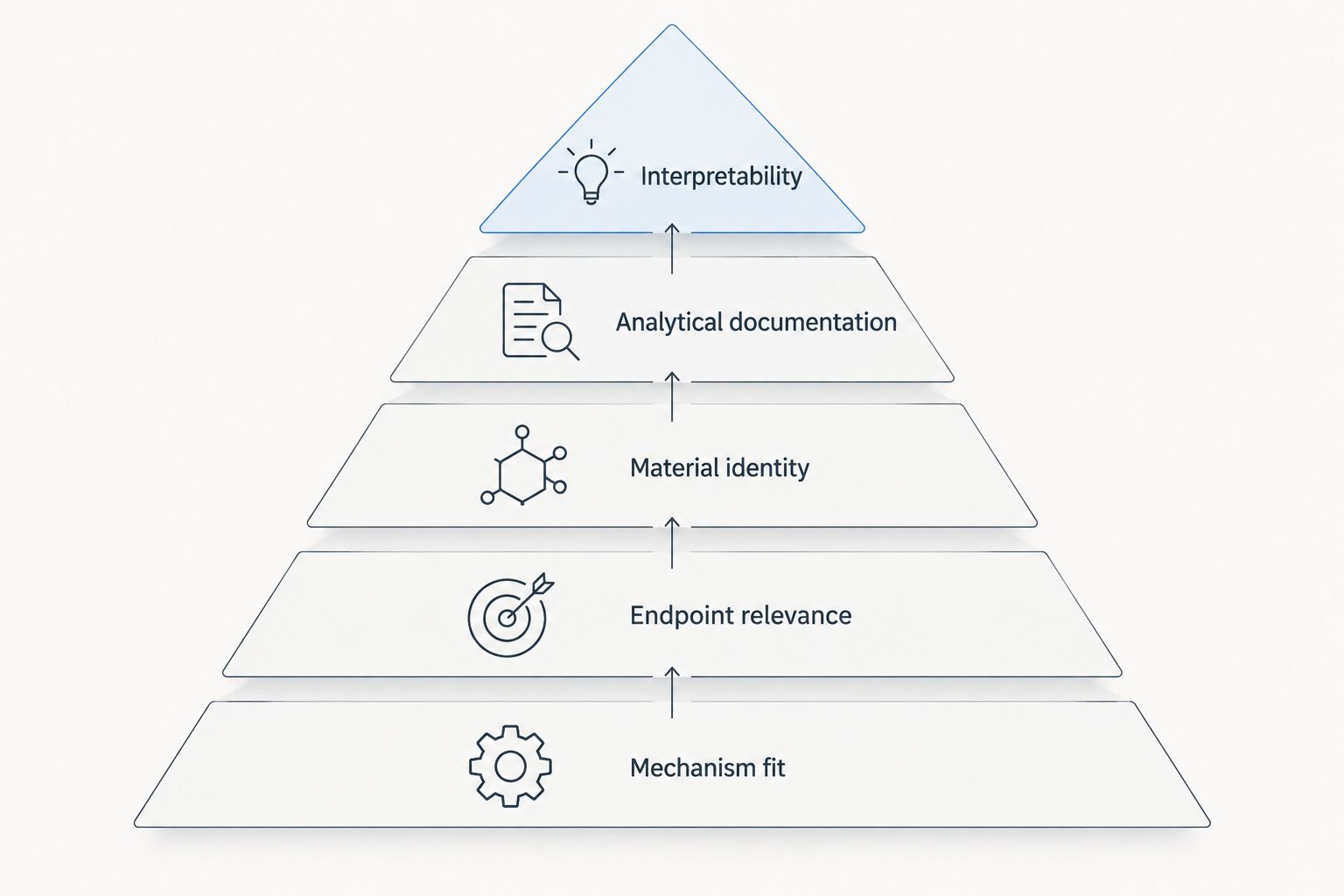
What makes the best peptides for anti-aging research?
Use these criteria before comparing names. A recognizable peptide with poorly matched endpoints is a weaker choice than a clearly identified candidate that answers your actual question.
- Mechanism fit: Select a peptide whose established target or research context matches the pathway under investigation.
- Endpoint relevance: Distinguish matrix remodeling, receptor signaling, and tissue responses from endpoints that directly assess aging biology.
- Material identity: Confirm the stated sequence, chemical form, and composition. A name alone does not characterize a research material.
- Analytical documentation: Examine batch-linked identity and purity information, including methods and the basis of reported results.
- Interpretability: Prefer a design that lets you distinguish peptide-specific effects from formulation, model, or assay effects.
These criteria deliberately exclude popularity and broad anti-aging language. Neither establishes that a material belongs in your experiment.
For a 2026 research purchase, request documentation that can be tied to the material you will receive. A general certificate or an isolated purity figure cannot answer every question about identity, composition, or suitability.
Peptides for anti-aging research at a glance
The order below is a decision tree. GHK-Cu comes first for matrix-focused work; the other candidates serve different laboratory questions rather than competing for a universal anti-aging title.
| Candidate | Best for | Standout research feature | Key limitation |
|---|---|---|---|
| GHK-Cu | Extracellular-matrix research | Copper-complexed tripeptide studied in matrix-related biology | Matrix changes do not establish an anti-aging effect |
| Retatrutide | Multi-receptor metabolic signaling | Activity at GIP, GLP-1, and glucagon receptors | Combined signaling complicates receptor-specific attribution |
| Tirzepatide | Dual-receptor metabolic comparisons | Activity at GIP and GLP-1 receptors | Metabolic readouts are not direct aging endpoints |
| BPC157 | Exploratory tissue-response research | Preclinical research involving tissue injury and repair | Repair-model findings do not establish general aging relevance |
| CJC1295 | GHRH-pathway research | Growth hormone-releasing hormone analog | Endocrine signaling requires a suitable model and distinct endpoints |
No candidate wins across every column. Start with the pathway, then evaluate whether the available material and research model support an interpretable result.
1. GHK-Cu: best peptide for extracellular-matrix research
GHK-Cu is the copper complex of the tripeptide glycyl-L-histidyl-L-lysine. Its research context includes extracellular-matrix biology and tissue-remodeling processes. That makes it the most direct starting point in this list for matrix-focused questions.
The distinction between GHK and GHK-Cu matters. A copper-complexed material and an uncomplexed peptide are not interchangeable descriptions, so confirm which form your research requires and which form the documentation identifies.
GHK-Cu pros:
- Its matrix-related research context fits a clearly defined experimental theme.
- Its peptide identity is specific rather than a blend label.
- Its copper association creates a distinct material-characterization question.
- It supports a narrower starting hypothesis than a general longevity claim.
GHK-Cu cons:
- Matrix-related findings cannot establish organism-level aging effects.
- Copper-associated effects require appropriate controls and interpretation.
- Evidence from one model does not establish performance in another.
Best for: Researchers investigating extracellular-matrix responses with endpoints selected for that purpose.
For a 2026 shortlist, keep GHK-Cu separate from senescence-specific candidates unless the experiment directly measures senescence. Collagen-related or remodeling readouts alone do not answer that question.
Verdict: Buy only for a defined matrix-focused research question, after confirming material identity and documentation.
2. Retatrutide: best peptide for multi-receptor metabolic research
Retatrutide is a peptide agonist with activity at 3 receptor targets: GIP, GLP-1, and glucagon receptors. Its place in this guide is metabolic-signaling research, not a demonstrated anti-aging effect.
The multi-receptor profile is the reason to select it. If your question concerns interactions among those signaling systems, Retatrutide offers a different experimental starting point from a candidate with a narrower receptor profile.
Retatrutide pros:
- It connects three named receptor systems within one candidate.
- Its target profile supports explicit metabolic-signaling hypotheses.
- It provides a mechanistically distinct comparison with Tirzepatide.
- It encourages endpoint selection based on receptor biology rather than broad labels.
Retatrutide cons:
- A combined response does not identify which receptor contributed to it.
- Target relevance depends on the biological model used.
- Metabolic changes alone do not establish altered aging biology.
Best for: Laboratory research examining combined GIP, GLP-1, and glucagon-receptor signaling.
Retatrutide belongs on a 2026 anti-aging research shortlist only when the metabolic question is explicit. Calling it a longevity peptide does not supply the missing connection between receptor activity and an aging endpoint.
For Southwestaminos buyers, the purchasing question is whether the listed material matches the intended research candidate and carries adequate analytical documentation. Do not substitute a category label for that assessment.
Verdict: Buy for a defined multi-receptor hypothesis; skip for an unspecified anti-aging screen.
3. Tirzepatide: best peptide for dual-receptor comparisons
Tirzepatide has activity at 2 receptor targets: GIP and GLP-1 receptors. Its research value here is a defined dual-receptor profile, particularly when your question does not require glucagon-receptor agonism.
Compared with Retatrutide, Tirzepatide has fewer receptor targets in its stated agonist profile. That distinction informs the research question, but it does not make either candidate universally better or permit simple subtraction of their biological effects.
Tirzepatide pros:
- It has a clearly defined dual-receptor research scope.
- It fits questions centered on GIP and GLP-1 signaling.
- It provides a distinct comparison for broader receptor-profile research.
- It helps separate a metabolic hypothesis from a vague anti-aging claim.
Tirzepatide cons:
- Dual-receptor activity still complicates attribution to a single pathway.
- Differences from Retatrutide extend beyond counting receptor targets.
- A metabolic assay cannot establish an anti-aging effect by itself.
Best for: Researchers studying combined GIP and GLP-1 signaling without selecting a triple-receptor candidate.
Choose Tirzepatide because the target profile matches the protocol's question. Do not choose it because a general longevity discussion treats every metabolically relevant peptide as interchangeable.
Verdict: Buy for a defined dual-receptor comparison; hold when the experiment lacks pathway-specific endpoints.
4. BPC157: best peptide for exploratory tissue-response research
BPC157 appears in preclinical literature involving tissue injury and repair. That context makes it an exploratory candidate for tissue-response questions, not an established choice for measuring general biological aging.
A repair response and an aging phenotype are different concepts. Your study needs to establish which it measures before a BPC157 result can be interpreted within an anti-aging research discussion.
BPC157 pros:
- Its preclinical research context provides a tissue-response starting point.
- It can be considered independently rather than inside a multi-peptide blend.
- It keeps the candidate tied to a defined injury or repair question.
BPC157 cons:
- Repair-model results do not establish general anti-aging effects.
- Findings remain dependent on model, controls, and endpoints.
- Broad tissue-repair language obscures important differences between experiments.
Best for: Exploratory preclinical work with a specified tissue-response endpoint.
Southwestaminos lists BPC157, but that listing is not evidence of experimental suitability. Assess the research material separately from the interpretation of published biological findings.
Verdict: Hold unless the study specifically concerns tissue responses; skip as a default anti-aging candidate.
5. CJC1295: best peptide for GHRH-pathway research
CJC1295 is a growth hormone-releasing hormone analog. Its central research pathway is the GHRH receptor—1 receptor target in this comparison—rather than the metabolic receptor combinations associated with Retatrutide or Tirzepatide.
The pathway distinction is useful. It is not evidence that endocrine signaling changes represent an anti-aging effect, and it does not remove the need to verify the exact molecular form of the research material.
CJC1295 pros:
- It supplies a distinct endocrine-signaling research category.
- Its GHRH-pathway context supports a specific mechanistic question.
- It avoids conflating endocrine research with extracellular-matrix work.
CJC1295 cons:
- The model must be appropriate for the pathway under investigation.
- The exact molecular form must be clear in the documentation.
- Endocrine readouts do not independently demonstrate altered aging biology.
Best for: Laboratory research specifically designed around the GHRH pathway.
Do not add CJC1295 merely to broaden a peptide panel. Add it when the pathway belongs in the hypothesis and the experiment can distinguish its relevant responses.
Verdict: Hold for pathway-specific research; skip for a general matrix or metabolic screen.
How these peptides are ranked
This 2026 ranking uses mechanism fit, endpoint relevance, material identity, analytical documentation, and interpretability. It is a research-selection framework, not a head-to-head efficacy trial or a supplier-quality ranking.
GHK-Cu leads for extracellular-matrix questions. Retatrutide and Tirzepatide occupy separate metabolic slots; BPC157 and CJC1295 belong only when tissue-response or endocrine questions are part of the study.
A narrower question produces a more defensible shortlist. No rank here establishes an anti-aging benefit, and no supplier name replaces batch-specific evaluation.
Which peptide should you choose?
Choose GHK-Cu as the default only when your question concerns extracellular-matrix biology. An undecided researcher should first define an endpoint, not purchase a broad collection of peptides.
Use this selection sequence:
- Define the endpoint: State exactly what the experiment measures and whether it addresses aging biology directly or an adjacent process.
- Match the mechanism: Select GHK-Cu, Retatrutide, Tirzepatide, BPC157, or CJC1295 according to the relevant pathway.
- Confirm identity: Reconcile the material description with its sequence, chemical form, and composition.
- Review documentation: Check whether analytical records identify the batch and explain the reported results.
- Check interpretation: Ensure the controls support the conclusion you intend to draw.
For Southwestaminos research buyers, this sequence separates two decisions: which peptide fits the hypothesis, and whether a particular material meets the laboratory's requirements. Neither decision should be inferred from the other.
In 2026, the strongest selection remains the one you can justify before seeing a result. Keep this guide limited to laboratory research; it provides no human-use, dosing, or administration guidance.
FAQ
What's the best peptide for anti-aging research?
GHK-Cu is the default in this guide for extracellular-matrix research, not a universal anti-aging candidate. Retatrutide, Tirzepatide, BPC157, and CJC1295 fit different laboratory questions, and none should be selected without a defined endpoint.
Is Retatrutide better than Tirzepatide for laboratory research?
Retatrutide fits research involving GIP, GLP-1, and glucagon-receptor signaling; Tirzepatide fits GIP and GLP-1 questions. Neither is universally better, and their biological differences cannot be reduced to receptor counts alone.
Does GHK-Cu research prove an anti-aging effect?
Matrix-related GHK-Cu research does not by itself prove an anti-aging effect. The conclusion depends on the model, controls, and whether the study directly measures an aging-related endpoint.
Should I choose a peptide blend for an initial experiment?
Choose an individual candidate when your priority is attributing a response to that candidate. A blend requires a combination-specific hypothesis and controls that address the contribution of its components.
What documentation should a research peptide have?
Research-peptide documentation should identify the material and connect analytical results to the relevant batch. Review the chemical form, analytical methods, identity evidence, and basis of any purity result against your laboratory's requirements.
Is BPC157 a default choice for aging studies?
BPC157 is not a default choice for aging studies in this guide. Its preclinical tissue-response context fits a narrower question, and repair-related findings do not establish general aging relevance.
Can this guide be used for human peptide use?
No. This guide covers laboratory-research selection only and provides no human-use, dosing, administration, medical, or treatment guidance.
One last thing
High analytical purity and biological relevance answer different questions. A well-characterized peptide can still be the wrong candidate for your endpoint, while an interesting mechanism cannot compensate for uncertain material identity.
Before placing an order, write a sentence naming the candidate, the pathway, and the endpoint. If that sentence ends only with anti-aging, tighten the question first.