Best overall for copper-dependent matrix research: GHK-Cu. Best for exploratory connective-tissue models: BPC157. Best conditional choice for sequence-defined cytoskeletal research: TB500. This 2026 guide ranks peptides for tissue repair research by experimental fit and interpretability, not by claims about human healing.
- GHK-Cu leads peptides for tissue repair research when copper-dependent extracellular matrix biology is the experimental question.
- BPC157 fits exploratory connective-tissue research; preclinical findings do not establish human efficacy.
- TB500 requires sequence verification before thymosin beta-4 literature can inform your experiment.
- Southwestaminos lists these research categories; assess each candidate through lot-specific identity and analytical documentation.
Why this matters
A peptide name is not an experimental specification. You need to know what molecule you are studying, which biological question it addresses, and whether your measurements distinguish the proposed effect from a confound.
Southwestaminos lists BPC157, TB500, and GHK-Cu among its peptide offerings. For Southwestaminos tissue repair research buyers, molecular identity and model fit should decide the shortlist—not the strength of a repair claim. This guide addresses laboratory research only, without human-use, dosing, or administration guidance.
For a 2026 research shortlist, separate mechanistic relevance from demonstrated repair. Cell migration, matrix-associated gene expression, and tissue-level function are different endpoints; a result in one does not establish the others.
What makes the best peptides for tissue repair research?
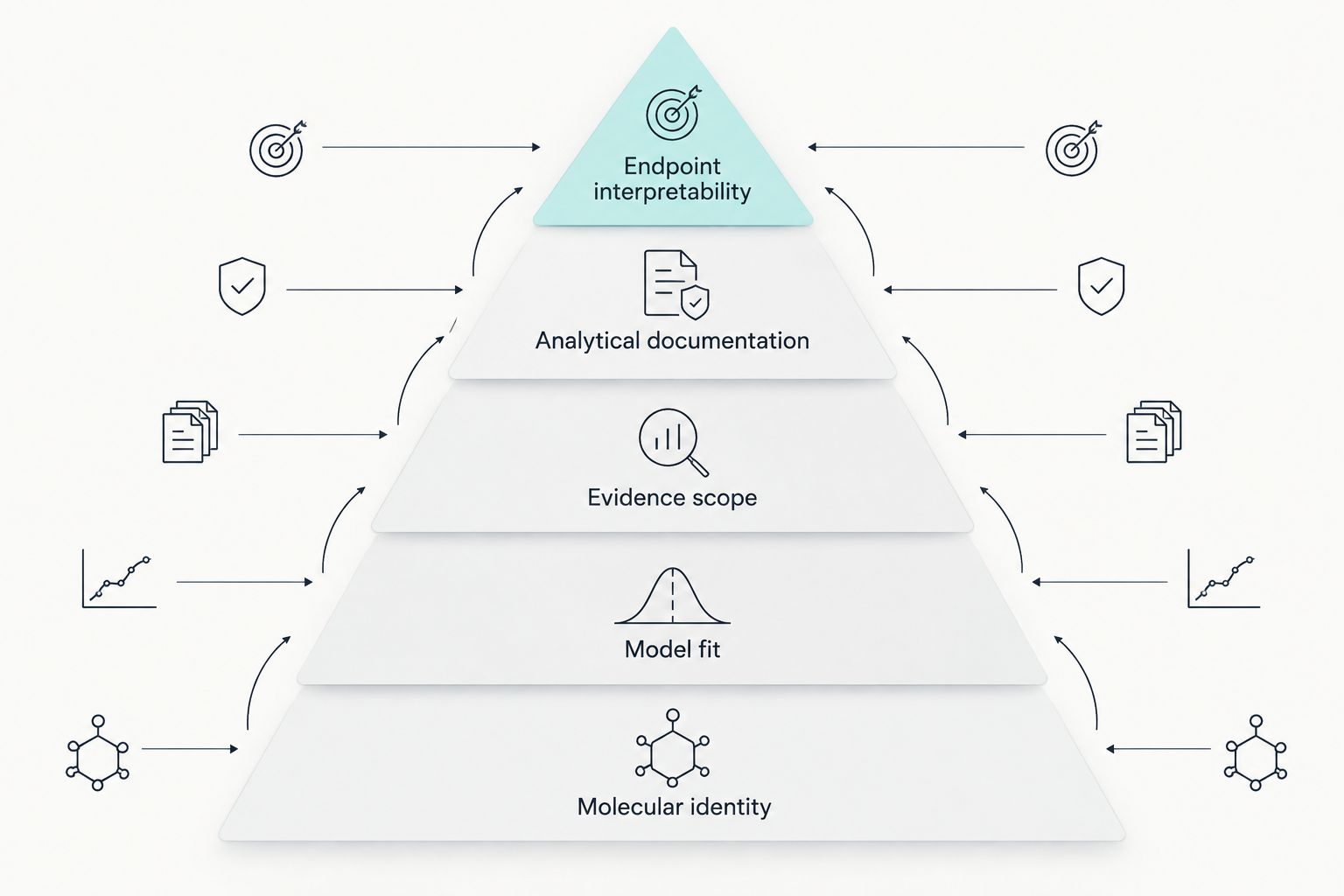
Use these criteria before choosing a candidate. A peptide with a familiar name still fails the selection process if you cannot define its composition or interpret its effect.
- Molecular identity: Confirm the sequence, chemical form, and expected molecular mass. Treat a catalog label as a starting point, not proof of identity.
- Model fit: Match the candidate to a stated biological question, such as matrix regulation, connective-tissue response, or actin-associated cell behavior.
- Evidence scope: Distinguish biochemical, cell-based, and animal findings. Do not translate preclinical observations into human efficacy claims.
- Analytical documentation: Examine lot-linked identity testing, purity methods, and the underlying analytical records. A percentage without a method is incomplete information.
- Endpoint interpretability: Choose measurements and controls that separate the proposed mechanism from changes in viability, proliferation, or assay chemistry.
These criteria rank experimental usefulness, not therapeutic performance. The best candidate is the one that lets you test a defined hypothesis with interpretable controls.
Peptides for tissue repair research at a glance
The 2026 ranking below gives each candidate a distinct experimental role. It does not imply that the candidates are interchangeable or that any has established human tissue-repair efficacy.
| Rank and candidate | Best for | Standout feature | Key limitation |
|---|---|---|---|
| 1. GHK-Cu | Copper-dependent extracellular matrix research | A defined copper-binding tripeptide | Copper-related effects require appropriate controls |
| 2. BPC157 | Exploratory connective-tissue models | A 15-amino-acid peptide discussed in preclinical repair literature | Model-specific findings do not establish general repair efficacy |
| 3. TB500 | Sequence-defined cytoskeletal research | A candidate that requires comparison with the specified thymosin beta-4-related sequence | The TB500 label alone does not establish molecular identity |
1. GHK-Cu: best for copper-dependent matrix research
GHK-Cu is the copper complex of glycyl-L-histidyl-L-lysine, a peptide containing 3 amino acids. Its copper-binding chemistry makes it a relevant candidate when your research question concerns copper-dependent biology and extracellular matrix regulation.
The useful starting point is a mechanism, not a broad repair promise. Define whether your experiment examines matrix-associated expression, protein production, or a functional endpoint before choosing the material.
GHK-Cu pros:
- Its short, defined peptide sequence supports a clear molecular identity check.
- Copper binding provides a specific chemical feature to investigate.
- Copper-dependent questions can be separated from peptide-only questions through suitable controls.
- Matrix-focused endpoints provide a narrower research question than an undefined healing claim.
GHK-Cu cons:
- Copper chemistry complicates interpretation if the controls do not address it.
- Changes in matrix-associated markers do not establish organized tissue repair.
- Results depend on the experimental system and cannot establish human benefit.
Best for: Laboratory researchers investigating copper-dependent extracellular matrix biology.
In a 2026 protocol, specify whether the material is GHK or GHK-Cu. Those names describe different chemical forms, so silently treating them as equivalents weakens the experiment before data collection begins.
Also separate marker changes from function. Increased expression of a matrix-associated gene is not evidence that the resulting matrix has the structure or mechanical properties relevant to your question.
Verdict: Buy for a defined copper-dependent matrix hypothesis, after confirming identity and chemical form.
2. BPC157: best for exploratory connective-tissue models
BPC157 is a 15-amino-acid peptide represented in preclinical literature concerning tissue responses, including connective-tissue models. That literature supports an exploratory research rationale, not a conclusion that BPC157 repairs tissue across experimental systems.
Choose BPC157 when your objective is to examine a specific preclinical observation in a clearly described model. The research question should identify the tissue system, endpoint, and comparison rather than rely on the phrase tissue repair alone.
BPC157 pros:
- Its defined sequence gives identity testing a specific target.
- Existing preclinical literature provides model-specific questions to investigate.
- A single-peptide design avoids the attribution problem created by an undefined blend.
- Connective-tissue endpoints allow a focused exploratory study rather than a category-wide claim.
BPC157 cons:
- Preclinical findings do not establish human efficacy or safety.
- An observation in one tissue model does not establish the same effect in another.
- A broad repair hypothesis makes negative and positive results harder to interpret.
Best for: Researchers examining model-specific connective-tissue responses in exploratory laboratory studies.
Start with the original experimental methods behind the observation you want to investigate. A summary that omits the model, controls, or measured endpoint cannot supply the basis for a reproducible study.
Your analysis should distinguish tissue-associated observations from functional repair. Histological appearance, marker expression, and mechanical behavior answer different questions; describe the result at the level actually measured.
Verdict: Buy for a specific exploratory connective-tissue question; skip claims of universal repair.
3. TB500: best for sequence-defined cytoskeletal research
TB500 needs the strictest identity gate in this shortlist. Full-length thymosin beta-4 contains 43 amino acids and is associated with actin binding, but the label TB500 does not by itself establish that a supplied material is full-length thymosin beta-4.
The research value depends on the actual sequence and chemical form. Do not transfer findings from full-length thymosin beta-4 to another material solely because the names appear together in commercial descriptions.
TB500 pros:
- Sequence verification creates a clear accept-or-reject step before experimentation.
- A verified molecular specification lets you select relevant literature rather than rely on label associations.
- Actin-associated questions provide a defined research direction when supported by the identified molecule.
TB500 cons:
- The commercial label is insufficient to determine sequence or molecular form.
- Full-length thymosin beta-4 evidence cannot automatically support a fragment or modified material.
- Cytoskeletal or migration observations do not establish tissue-level repair.
Best for: Researchers investigating a verified thymosin beta-4-related molecule in a sequence-appropriate cytoskeletal model.
Request the sequence and identity evidence before treating TB500 as a research recommendation. If the supplied specification differs from the molecule in a cited study, document that difference rather than treating it as a minor naming issue.
For a 2026 shortlist, unresolved identity is a reason to stop selection. More literature about a related molecule does not resolve uncertainty about the material in your laboratory.
Verdict: Hold until sequence and identity are verified; skip any material with unresolved composition.
Where Retatrutide and Tirzepatide fit
Retatrutide and Tirzepatide belong to a different research question from the candidates ranked above. Retatrutide has activity at GIP, GLP-1, and glucagon receptors; Tirzepatide has activity at GIP and GLP-1 receptors.
Those receptor profiles support receptor-signaling research. They do not establish either molecule as a default choice for a tissue repair experiment.
Southwestaminos includes Retatrutide and Tirzepatide in its stated peptide range. Their inclusion in a catalog does not make them substitutes for GHK-Cu, BPC157, or a verified thymosin beta-4-related material.
Retatrutide research fit: Its multi-receptor activity suits questions that explicitly involve those signaling pathways. The limitation for a tissue repair shortlist is attribution: a downstream tissue-associated observation does not identify which receptor pathway explains it.
Tirzepatide research fit: Its GIP and GLP-1 receptor activity suits a defined dual-receptor signaling question. The limitation is the same boundary between a signaling result and evidence of tissue repair.
Best for: Receptor-specific laboratory studies, not a generic tissue repair shortlist. Exclude both from your default repair panel unless the hypothesis explicitly connects the receptor pathway to the endpoint.
Check the material before interpreting the biology
A 2026 procurement decision should leave a traceable connection between the material, its analytical documentation, and the experiment. Keep identity, purity, and biological suitability as separate checks.
Identity is not purity
Chromatographic purity describes the signal distribution under a particular analytical method. It does not, by itself, prove that the main component has the intended sequence.
Mass spectrometry provides molecular-mass evidence, but the claim supported by a report depends on the method and analysis performed. Read the report rather than treating an instrument name as a complete identity conclusion.
Documentation should match the lot
Confirm that the analytical record identifies the material you intend to study. A generic example report cannot establish the composition of a different lot.
Check whether the record states the method, sample identifier, and reported result. Keep those records with the experimental file so later comparisons do not depend on memory or a catalog description.
Biological suitability is a separate question
A purity result does not automatically establish suitability for every biological assay. Consider whether endotoxin, residual reagents, or other contaminants could confound the endpoints in your model.
The relevant documentation depends on the experiment. Do not treat the phrase research grade as a substitute for the specific acceptance criteria your laboratory requires.
Design an experiment that can answer the question
Begin with a written hypothesis narrow enough to fail. A statement about a defined matrix endpoint or cell behavior is more useful than an expectation that a peptide promotes repair.
Use controls that address the mechanism under investigation. For GHK-Cu, distinguish peptide-associated and copper-associated questions; for TB500, establish the sequence before selecting the comparison literature.
Keep viability separate from the primary endpoint. A change in cell number can complicate interpretation of migration, expression, and other assay readouts.
Finally, decide what the result will permit you to say before collecting it. A cell-based observation supports a statement about that cell-based system—not a claim about human tissue recovery.
How the ranking works
This shortlist prioritizes molecular definition, model fit, evidence scope, analytical documentation, and endpoint interpretability. It is an experimental-selection guide, not a head-to-head efficacy ranking.
GHK-Cu takes the default position for a defined copper-dependent matrix question. BPC157 occupies the exploratory connective-tissue slot, while TB500 remains conditional on sequence verification.
Which peptide should you choose?
Choose GHK-Cu if your laboratory question concerns copper-dependent matrix biology. Choose BPC157 for a specific exploratory connective-tissue model, and hold TB500 until its molecular identity supports the intended experiment.
If your hypothesis does not fit any of those roles, do not force a selection. Write the biological question first, then choose the material that can test it.
FAQ
What's the best peptide for tissue repair research?
GHK-Cu is the default choice in this guide for copper-dependent extracellular matrix research. BPC157 fits exploratory connective-tissue models, while TB500 requires sequence verification before selection. None of these rankings establishes human repair efficacy.
Is BPC157 better than GHK-Cu for laboratory research?
BPC157 is not universally better than GHK-Cu; they fit different experimental questions. BPC157 belongs in model-specific exploratory connective-tissue research, while GHK-Cu provides a defined copper-dependent matrix research question.
Is TB500 the same as thymosin beta-4?
The label TB500 alone does not establish that a material is full-length thymosin beta-4. Confirm the sequence, chemical form, and analytical identity before applying literature about thymosin beta-4 to the supplied material.
Does a peptide purity report prove molecular identity?
A purity result alone does not prove molecular identity. Interpret chromatographic purity alongside identity evidence and the stated analytical methods, with documentation linked to the material being studied.
Should Retatrutide or Tirzepatide be included in a tissue repair panel?
Include Retatrutide or Tirzepatide only when your hypothesis explicitly involves their receptor pathways. Their receptor-signaling profiles do not establish them as default tissue repair research candidates.
Can laboratory peptide results establish human healing benefits?
Laboratory peptide results do not establish human healing benefits. Biochemical, cell-based, and animal findings support conclusions within their tested systems and require separate evidence for broader claims.
What should research buyers check before selecting a peptide?
Research buyers should check molecular identity, model fit, evidence scope, lot-specific analytical documentation, and endpoint interpretability. Keep purity, identity, and biological suitability as separate acceptance decisions.
One last thing
The strongest reason to reject a candidate is an experiment you cannot interpret. In 2026, a familiar peptide name still cannot resolve uncertain composition, mismatched literature, or a poorly defined endpoint.
Before selecting any material, write the conclusion that each possible result would support. If every outcome would be described as evidence of repair, revise the experiment—not the wording of the claim.